
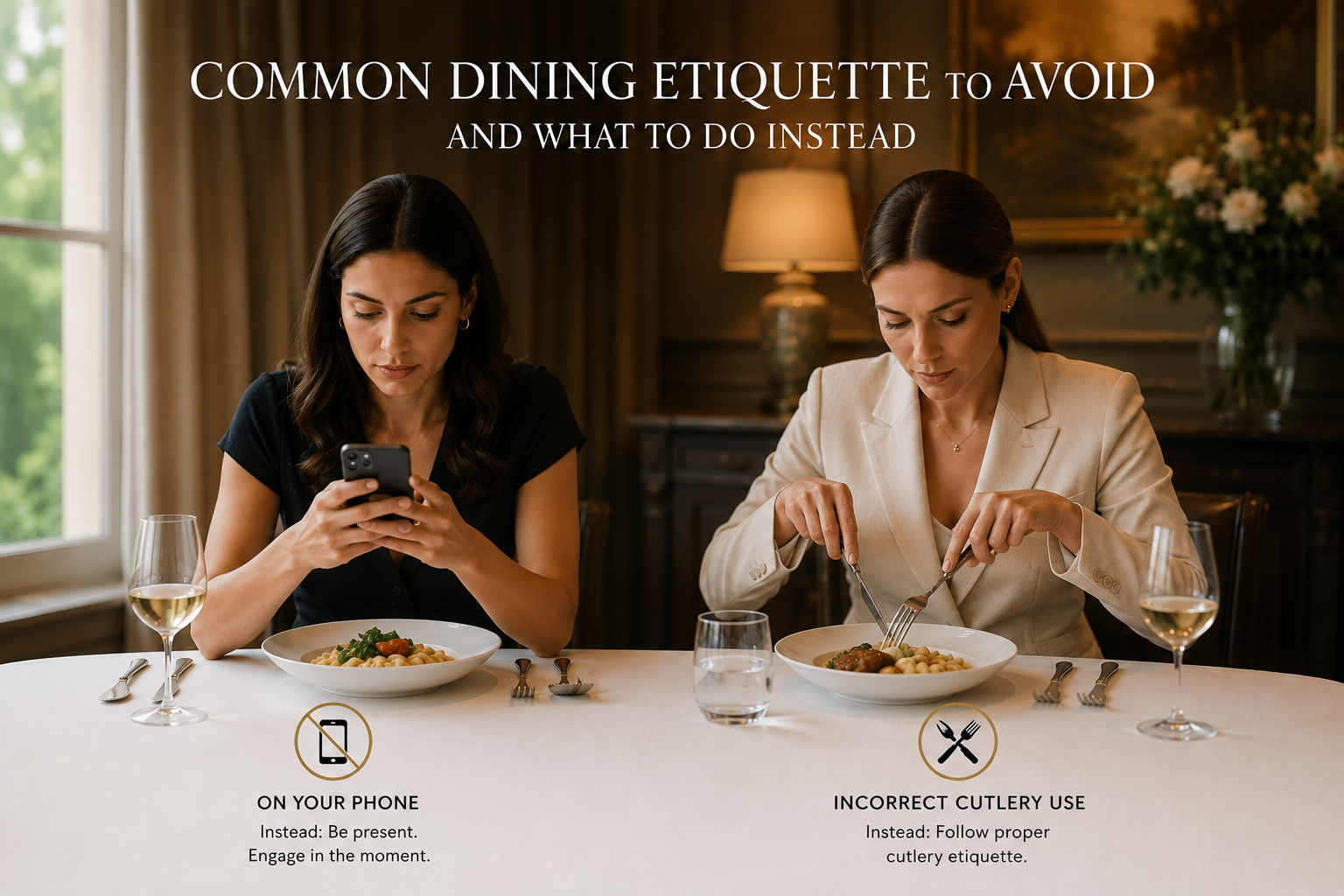
Common Dining Etiquette Mistakes to Avoid (and What to Do Instead)

Dining etiquette is often seen as a set of rules to follow, yet most challenges at the table do not come from a lack of knowledge. More often, they come from small, unnoticed habits that quietly shape how you are perceived.
Many of these habits are covered in Dining Etiquette for Beginners, but understanding where mistakes commonly happen allows you to refine your habits more naturally.
Most dining etiquette mistakes happen unintentionally. They often appear in moments of distraction, uncertainty, or simply from moving too quickly through the experience. Over time, these small habits can affect not only how you present yourself, but also how comfortable others feel around you.
This is not about criticism.
It is about awareness.
Once you notice these patterns, you can begin adjusting them naturally and move through any dining setting with greater ease, confidence, and composure.
Why Small Habits Matter at the Table
At the table, it is often the smallest details that shape the experience.
People may not always be able to explain what they notice, but they often remember how someone made them feel.
Dining etiquette is not about perfection. It is about creating ease — for yourself and for those around you.
Something as simple as interrupting someone, appearing distracted, or rushing through a meal can subtly change the atmosphere.
These moments may seem small, yet they can affect how comfortable others feel in your presence.
Awareness helps you recognise these habits and refine them over time.
In the end, it is rarely one individual action that people remember.
It is the overall impression you leave — one of attentiveness, composure, and consideration.
Common Dining Etiquette Mistakes — And What to Do Instead

Before we begin, it is worth remembering that most dining etiquette mistakes are unintentional and often forgivable. They usually come from habit, distraction, or simply not knowing what is expected.
It is important to know these habits as they can either support or ruin the atmosphere.
The goal is not perfection. The goal is awareness.
1. Being Distracted at the Table
One of the most common dining etiquette mistakes is becoming distracted — especially through phone use.
It may seem harmless to glance at your phone, briefly disengage, or lose focus during conversation.
Yet even small moments of distraction can quietly shift your attention away from the people around you and make interactions feel less engaging.
What to do instead:
Being fully present is one of the simplest ways to create ease at the table. Keep your phone out of sight and allow your attention to remain with the people around you.
If you are expecting an important call or message, excuse yourself briefly instead.
2. Speaking While Eating or Taking Large Bites
Speaking while chewing or taking overly large bites can make the experience feel rushed and uncomfortable for others.
What to do instead:
Take smaller bites and allow yourself time to finish before responding.
A slower pace creates a calmer, more composed presence and allows conversations to flow naturally.
3. Reaching Across Others
Reaching across people for items at the table may seem harmless, but it can interrupt the flow of the meal and draw unnecessary attention.
What to do instead:
Ask politely for what you need or wait until it is passed to you. Small moments of consideration help create a more pleasant experience for everyone.
4. Neglecting Your Posture
Posture influences more than appearance.
It shapes presence. Slouching, leaning over your plate, or appearing disengaged can affect how you are perceived at the table.
What to do instead:
Sit upright with relaxed shoulders and a balanced posture. Comfort and attentiveness often create a more refined presence than stiffness ever will.
5. Handling Personal Groomig at the Table
Actions such as picking your teeth, blowing your nose, or addressing personal discomfort can make others feel uncomfortable, even when necessary.
What to do instead:
Excuse yourself briefly and handle these moments away from the table. Returning calmly and discreetly helps preserve the atmosphere.
6. Eating Too Quickly
Eating too quickly often happens without awareness.
Yet finishing significantly ahead of others can unintentionally create a rushed feeling around the table.
What to do instead:
Allow yourself to slow down. Take smaller bites. Pause occasionally. Stay engaged with the moment.
Dining is meant to be experienced, not rushed through.
7. Treating Casual Setting Too Casually
Many people assume etiquette only matters in formal settings. As a result, awareness often drops in more relaxed settings. But most dining experiences happen in everyday, informal situations.
Coffee with friends. Lunch with family. A casual gathering.
These moments matter too.
What to do instead:
Maintain the same awareness regardless of the setting. Consistency is often what creates confidence.
8. Starting Before Others Are Served
Beginning before everyone has been served can make a meal feel rushed and, at times, inconsiderate. Dining is a shared experience, and starting too soon can disrupt the balance at the table
What to do instead:
Pause. Observe the table. Wait until everyone has been served or follow your host’s lead.
Shared experiences often begin with small moments of consideration.
9. Seasoning Your Food Before Tasting It
Adding salt or other seasonings before tasting your food can sometimes appear inattentive and may unintentionally suggest a lack of appreciation for the effort that has been put into preparing the meal.
What to do instead:
Take a moment to taste your food first, as intended. Then adjust with intention rather than habit.
10. Interrupting or Not Fully Engaging in Conversation

Dining is not only about food. It is also about connection.
Interrupting, speaking over others, or not listening attentively can affect the flow of conversation and make people feel overlooked.
What to do instead:
Allow others space to speak. Listen fully. Respond thoughtfully.
Balanced conversation creates ease.
Why These Mistakes Happen
Most dining etiquette mistakes are not deliberate. They often come from a lack of awareness or from habits that have never been consciously refined.
Many people learn by observation rather than direct guidance. As a result, small details can easily be overlooked.
There is also a tendency to either overthink or move through the experience without much awareness. Both often lead to the same outcome — losing awareness of how your actions affect those around you.
Recognising this is what allows you to make small, natural adjustments without becoming self-conscious.
How to Refine Your Habits Without Overthinking
Improvement rarely comes from trying to change everything at once.
It begins with small, consistent adjustments.
Start by noticing:
- your pace
- your posture
- how you engage in conversation
When something feels rushed or slightly out of place, pause and reset. You do not need to focus on every detail.
One or two habits at a time is enough. Over time, these small adjustments settle naturally and become part of how you carry yourself.
Dining etiquette is not about rigid rules. It is about awareness — of yourself and of those around you.
When your focus shifts toward creating a comfortable experience for others, your presence naturally becomes more refined.
Over time, these habits no longer feel forced.
They simply become part of who you are.
At its core, dining etiquette is about becoming more present, more attentive, and more considerate — qualities that transform a meal into something far more meaningful.
If you would like to develop this further, you may also enjoy:
Dining Etiquette for Beginners
How to Practice Dining Etiquette in Everyday Life
Or explore my coaching programmes designed to help women build confidence, refine their presence, and embody elegance in everyday life.
Check Reinada Website
Your Habits Shape the Woman You Become!