
Dining Etiquette for Beginners: 10 Simple Table Manners Everyone Should Know

Dining etiquette for beginners doesn’t have to feel intimidating. Whether you are dining with friends, family, or colleagues, a few simple principles can help you feel more comfortable and confident at the table. Yet for many women, dining etiquette can feel more complicated than it really is.
It is often mistaken for a set of strict rules or formal expectations that seem intimidating or outdated. In reality, most dining situations are much simpler than they appear.
The discomfort usually comes from not knowing what is expected. And when that happens, even the smallest moments at the table can begin to feel uncertain.
To feel more at ease — and to help others feel comfortable and appreciated — it helps to understand a few essential principles of table manners.
In this guide, I’ll walk you through the basics so that you can approach any table with greater confidence and a naturally refined presence.
Why Dining Etiquette Feels Difficult for Many Women
For many women, dining etiquette feels more complicated than it actually is — not because the principles are difficult, but because they are rarely explained in a clear and practical way.
Most women were never formally taught how to behave in different dining settings or what is expected in social environments.
Instead, many rely on observation or guesswork, which can create uncertainty even in simple situations.
That is often why dining etiquette feels intimidating.
But once you understand a few essential principles, everything begins to feel far more natural.
Why Basic Table Manners Matter for Beginners
Dining etiquette, at its heart, is about awareness — how your behaviour at the table shapes both your own experience and the experience of those around you.
You should feel confident whenever you sit down at a table. And that confidence often comes from understanding what is expected and feeling at ease in your actions.
Basic table manners remove uncertainty. They allow you to focus on the moment rather than worrying about what to do next.
They also show respect for your host and for the people sharing the table with you, while helping you feel more composed and present.
Even the smallest actions can leave a lasting impression. People notice these things — even if they cannot always explain why.
As Emily Post once said:
“Manners are a sensitive awareness of the feelings of others. If you have that awareness, you have good manners, no matter what fork you use.”
And that is where confidence at the table begins.
Basic Table Manners Everyone Should Know
Before we begin, it helps to remember that most dining situations are informal, even though etiquette is often associated with formal settings.
The same basic principles apply in both.
Once you understand them, you can move through almost any dining setting with more ease and confidence.
1. Start with Your Cutlery
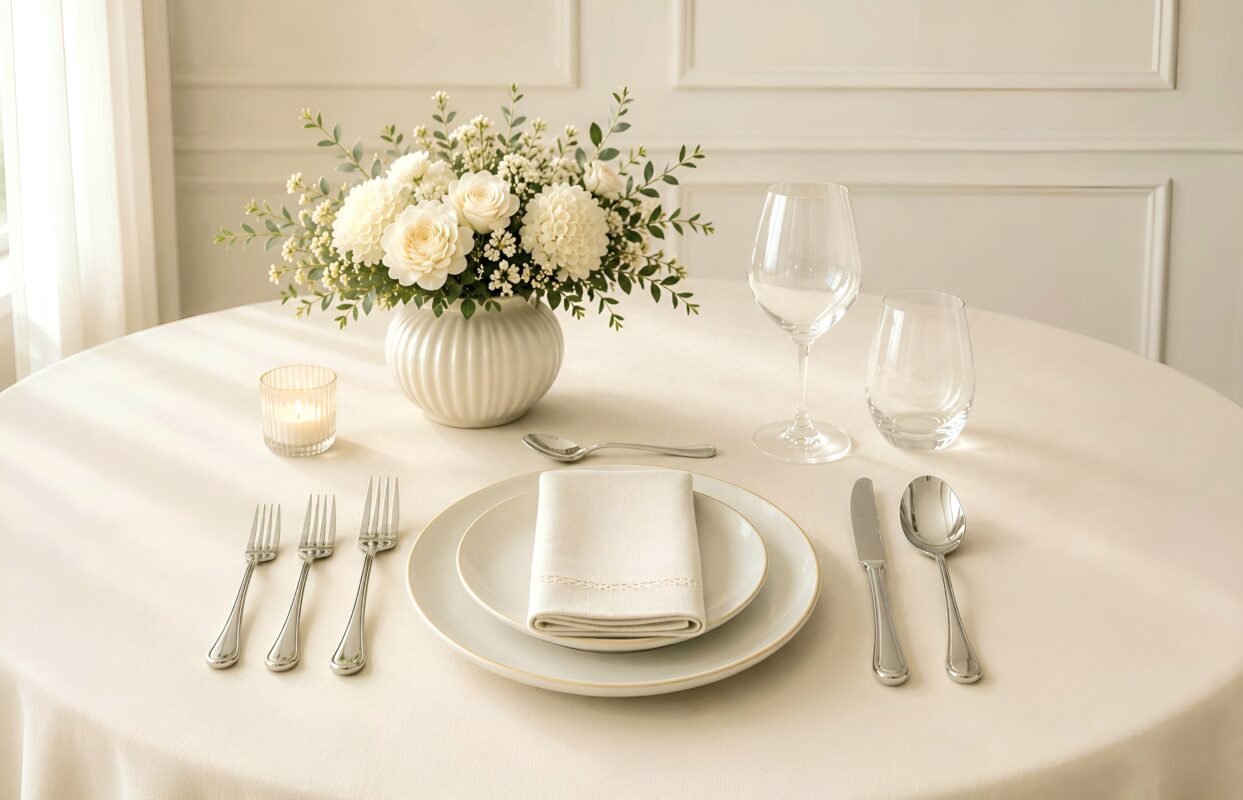
One of the most common sources of uncertainty at the table is not knowing which utensils to use.
A simple rule is this: start from the outside and work your way inward with each course.
Each utensil is placed in the order in which it will be used, which makes the process much more intuitive than it first appears.
2. Napkin Placement and Use
Once you sit down, gently unfold your napkin and place it on your lap. This quietly signals that you are ready to begin.
Avoid tucking it into your clothing.
The folded edge should face towards you so that you can use it discreetly throughout the meal.
When needed, gently dab around your mouth rather than wiping.
If you need to excuse yourself during the meal, place the napkin on your chair or neatly to the left of your plate if there is space.
At the end of the meal, place it neatly on the left side of your plate.
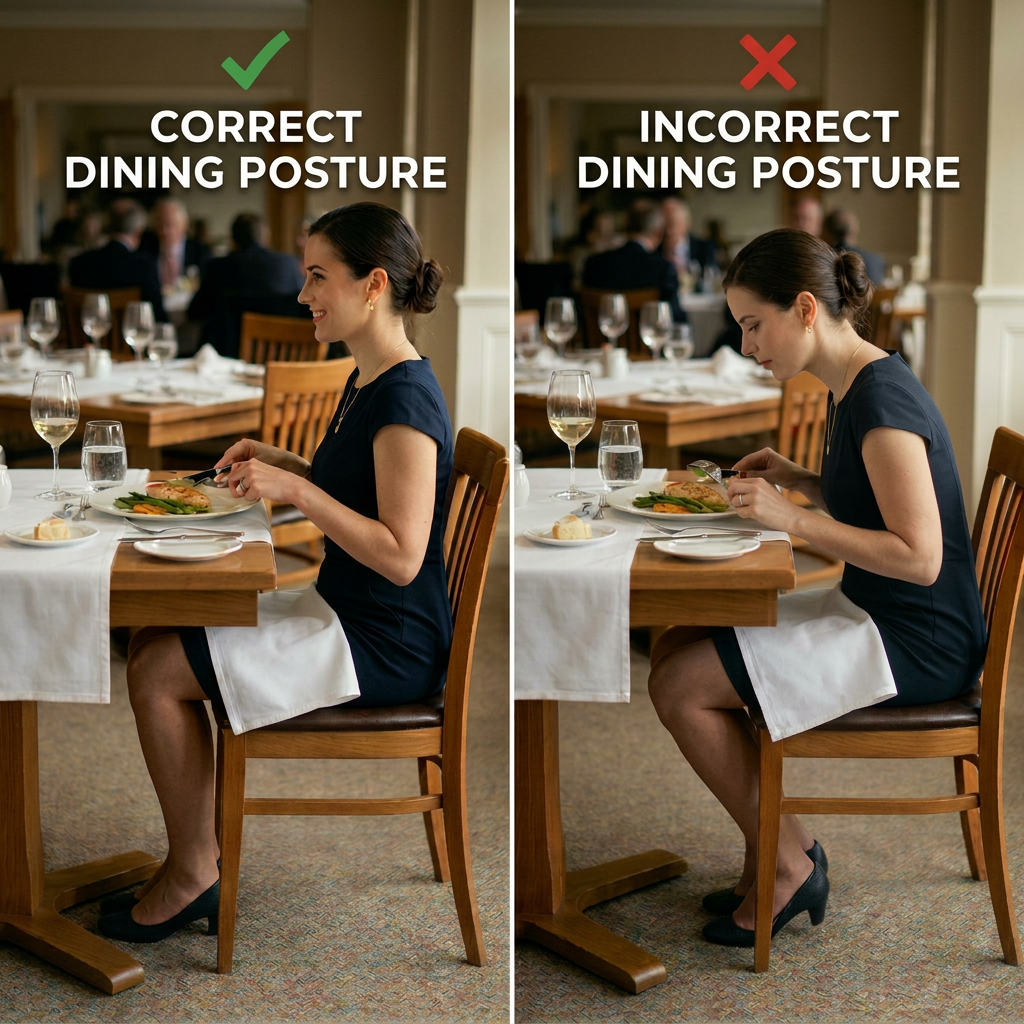
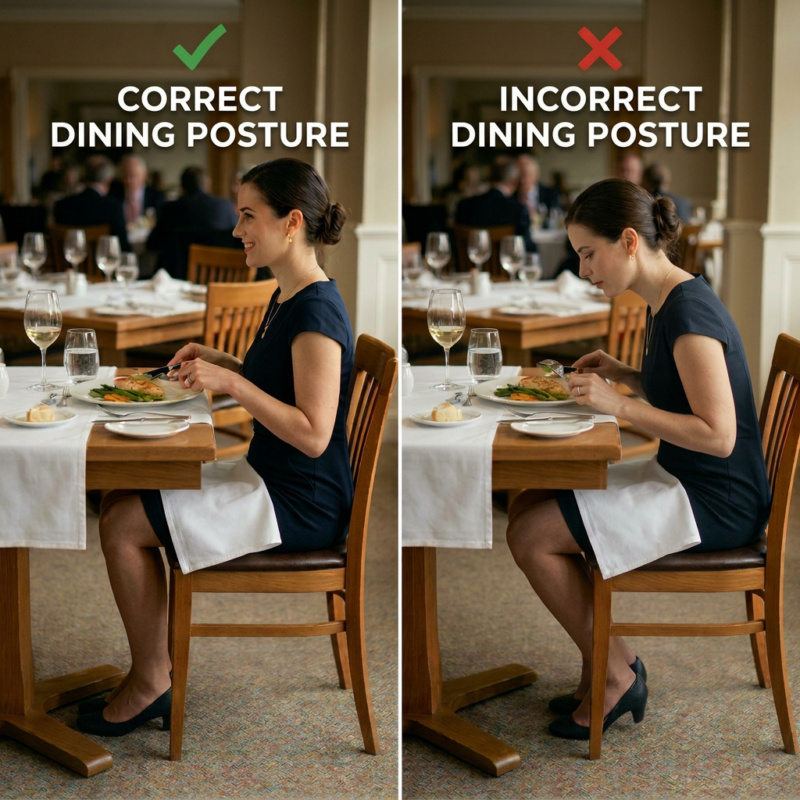
3. Sit with Good Posture
Posture shapes how you are perceived at the table.
Sit upright with relaxed shoulders. Let your arms rest naturally at your sides.
Your hands may rest lightly on the table when appropriate, or in your lap between courses.
Keep your elbows off the table while eating. Avoid slouching or leaning over your plate.
Aim for a posture that feels balanced, natural, and attentive.
4. Take Small, Controlled Bites
Dining is not something to rush.
Eating at a steady pace allows you to enjoy the moment and engage naturally with others.
Take smaller bites, chew with your mouth closed, and avoid speaking while your mouth is full.
If someone speaks to you while you are still chewing, simply acknowledge them with a small nod and finish before responding.
5. Avoid Using Your Phone
Your phone can easily interrupt the dining experience — often more than you realise.
Keeping it out of sight, preferably on silent mode, helps you remain present and engaged.
Even a brief glance at your phone can suggest that your attention is elsewhere.
If you are expecting an important call or message, a discreet check is understandable. But it should remain the exception rather than the habit.
If needed, it is considerate to let those you are dining with know in advance and excuse yourself if you need to take the call.
6. Engage in Polite Conversation
Conversation is an important part of the dining experience.
It is not only about what you say, but also how you listen. Aim for a balanced exchange.
Speak clearly, listen attentively, and leave space for others to contribute.
Avoid interrupting or dominating the conversation. Keeping the discussion light, respectful, and inclusive helps everyone feel at ease.
7. Wait Before You Start Eating
In group settings, take a moment to notice those around you before beginning. Wait until everyone has been served, or follow your host’s lead if one is present.
Beginning together creates a more considerate and shared experience.
8. Use Your Utensils Properly
Using your utensils correctly does not need to feel complicated.
Hold your knife and fork with a light, steady grip. Keep your movements calm and controlled.
Avoid switching utensils unnecessarily or using your hands when utensils are provided, unless the setting clearly allows it.
When pausing, rest your utensils neatly on your plate rather than on the table. When you have finished, place your knife and fork together on your plate to signal that you are done
9. Be Considerate at the Table
Reaching across others can feel disruptive.
Instead, politely ask for what you need, or wait for it to be passed. Simple courtesies — such as saying please and thank you — help create a more comfortable atmosphere.
Be mindful of your movements.
Avoid unnecessary noise with utensils, slurping, burping, or audible reactions while eating.
If you need to cough, cover your mouth with your napkin. If it continues, excuse yourself briefly, then return.
These small gestures help preserve comfort for everyone at the table.
10. Finish the Meal with Ease
Knowing how to finish a meal is just as important as knowing how to begin.
When you have finished eating, place your utensils together neatly on your plate. This quietly signals to the host or server that you are done.
Avoid rushing to leave the table, especially in group settings. Remain present until the meal naturally comes to a close.
End the meal with the same calm awareness with which you began.
That is often what leaves the strongest impression.
Dining Habits to Avoid
Most table mistakes are not dramatic.
They are usually small habits that draw unnecessary attention.
Rushing, speaking while chewing, or checking your phone repeatedly can interrupt the experience.
Personal grooming — such as picking your teeth, blowing your nose, or anything that draws attention away from the shared moment — should always be handled discreetly away from the table.
With awareness, these habits are usually easy to adjust.
Frequently Asked Questions
What is the difference between formal and informal dining?
Most dining situations are informal.
The same basic principles apply in both, though formal dining tends to follow a more structured format.
When should I start eating?
In group settings, it is best to wait until everyone has been served or to follow the lead of your host.
How do I know which utensils to use?
Start from the outside and work your way inward.
Use the utensils placed furthest from your plate first.
What are the most important table manners?
Focus on the basics — eat at a steady pace, keep your movements composed, be attentive to others, and avoid distractions such as your phone.
What should I do if I am unsure?
Pause briefly and observe others, especially your host.
Often, simply following the rhythm of the table is the most natural approach.
Dining etiquette is not about rigid rules. It is about awareness — of yourself and of others.
And that awareness allows you to move through any setting with greater ease and confidence.
As Judith Martin beautifully said:
“Good manners are not about making others feel inferior. They are about making everyone feel comfortable.”
When your focus is on creating comfort for others, your presence naturally becomes more refined.
And over time, these habits become part of how you carry yourself.
If you would like to feel more confident in social settings, you may find my etiquette coaching and practical elegance workshops helpful. They are designed to help you refine your manners, build confidence, and embody elegance in everyday life.
To continue developing these habits, you may also enjoy:
How to Practice Dining Etiquette in Everyday Life
Common Dining Etiquette Mistakes to Avoid
True Elegance Is Not Just Outward Appearance.
Check out Reinada
Frequently Asked Questions on Dining Etiquette
Most dining situations are informal.
The same basic principles apply in both, though formal dining tends to follow a more structured format.
In group settings, it is best to wait until everyone has been served or to follow the lead of your host.
Start from the outside and work your way inward.
Use the utensils placed furthest from your plate first.
Focus on the basics — eat at a steady pace, keep your movements composed, be attentive to others, and avoid distractions such as your phone.
Pause briefly and observe others, especially your host.
Often, simply following the rhythm of the table is the most natural approach.