
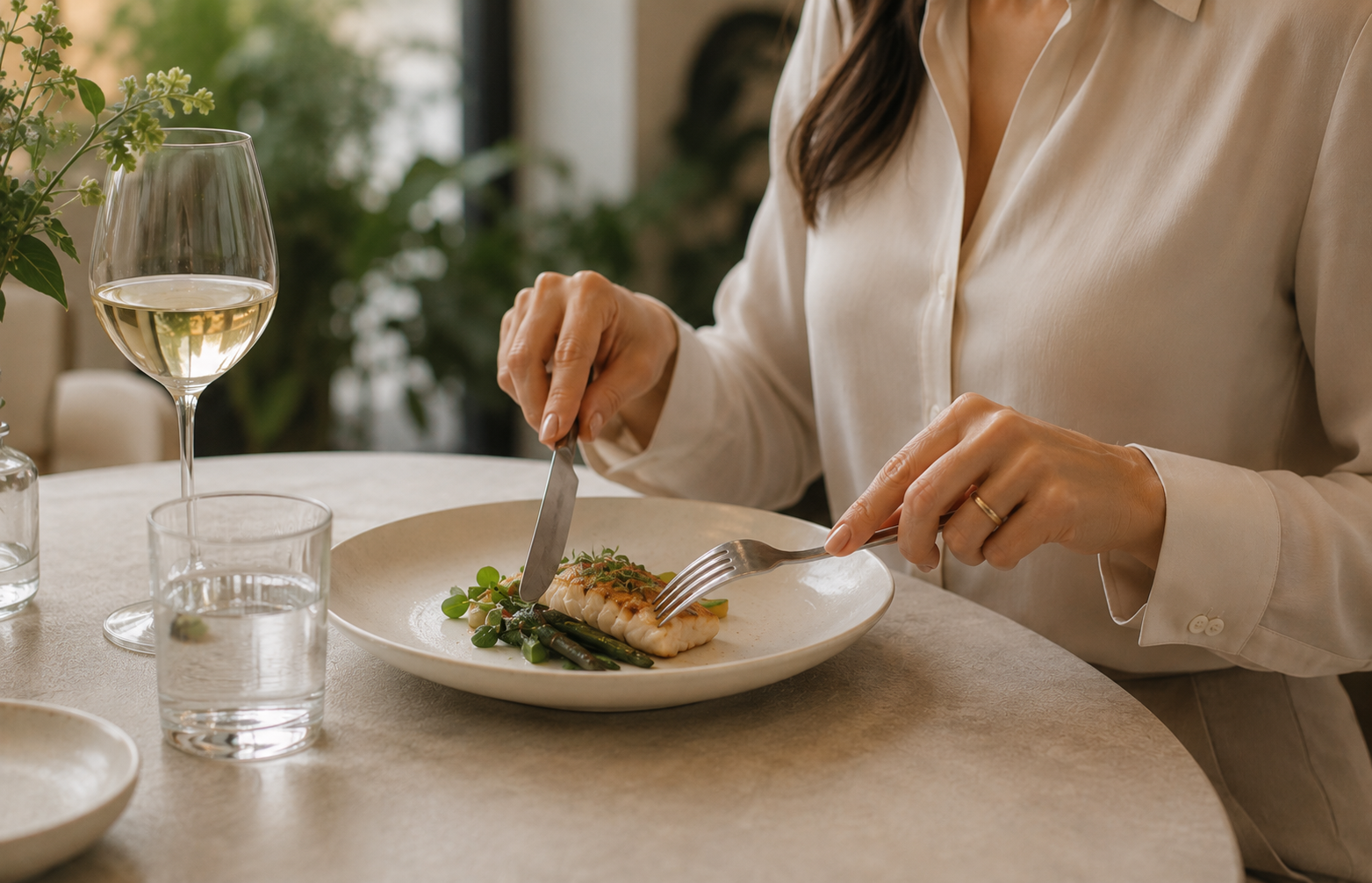

Practice dining etiquette – A memorable dining experience is shaped by good food, warm company, and a welcoming atmosphere. But just as important are the manners you bring to the table.
The way you carry yourself during a meal influences not only your confidence, but also the experience of those around you.
In everyday dining, this is often shaped by the small things you do consistently.
Knowing the basics of table manners is a strong starting point. But without regular practice, even simple dining situations can begin to feel uncomfortable or uncertain.
The good news is that you do not need a formal setting to improve.
Every meal is an opportunity to refine your habits, build awareness, and develop a more composed and confident presence.
If you are new to this topic, you may find it helpful to read Dining Etiquette for Beginners, where I explain the foundations in more detail.
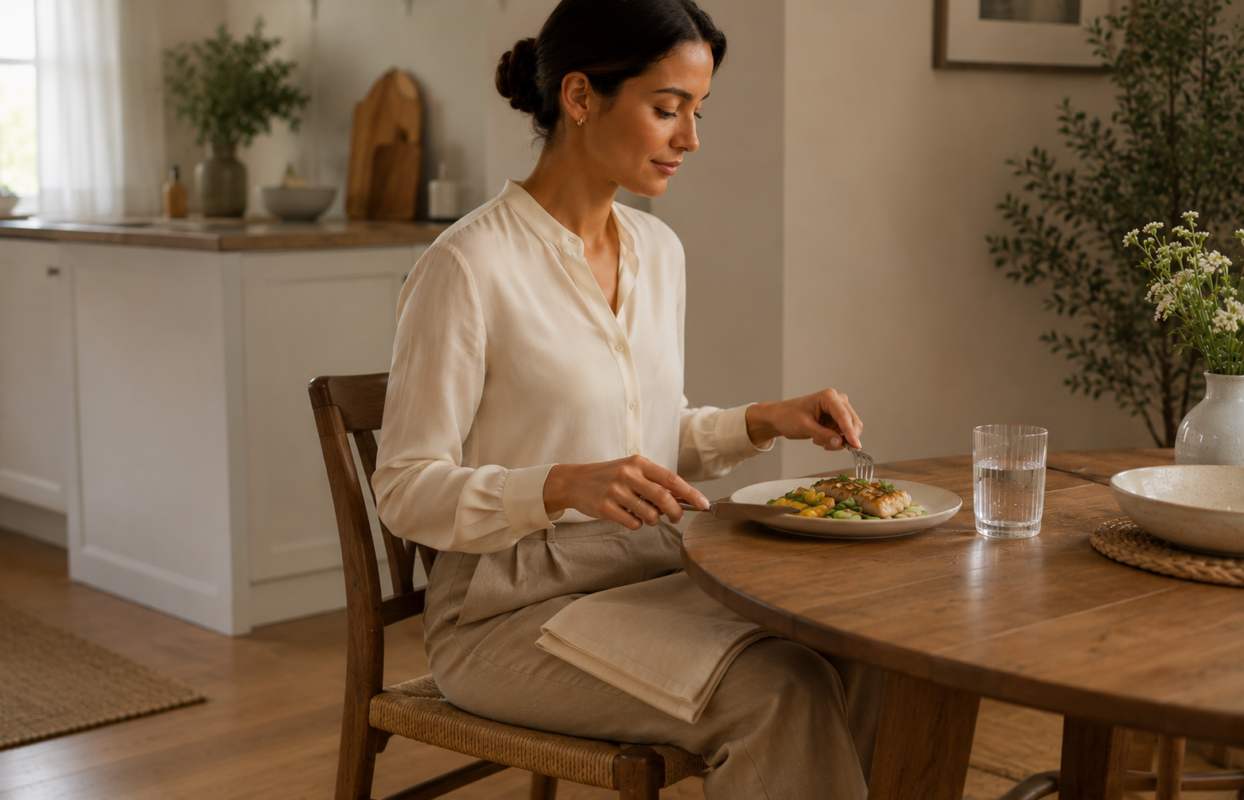
Why Practicing Dining Etiquette Matters
Knowing dining etiquette is one thing. Applying it naturally and confidently is another.
Without regular practice, small moments at the table can create hesitation — when to begin eating, how to respond in conversation, or how to move through a meal without second-guessing yourself.
Though these details may seem small, they shape both your comfort and the impression you leave on others.
The way you conduct yourself at the table communicates more than you may realise.
It reflects your awareness, your consideration for others, and your ability to move through social situations with ease.
Good table manners also help create an environment where everyone feels comfortable.
They reduce awkward moments, show appreciation for your host, and make the experience more enjoyable for the people around you.
When etiquette is practised only occasionally, it can feel uncertain when it matters most.
But when it becomes part of your daily life, it slowly settles into something more natural.
Over time, this helps you feel calm, confident, and comfortable in almost any dining setting.
How to Improve Table Manners at Home
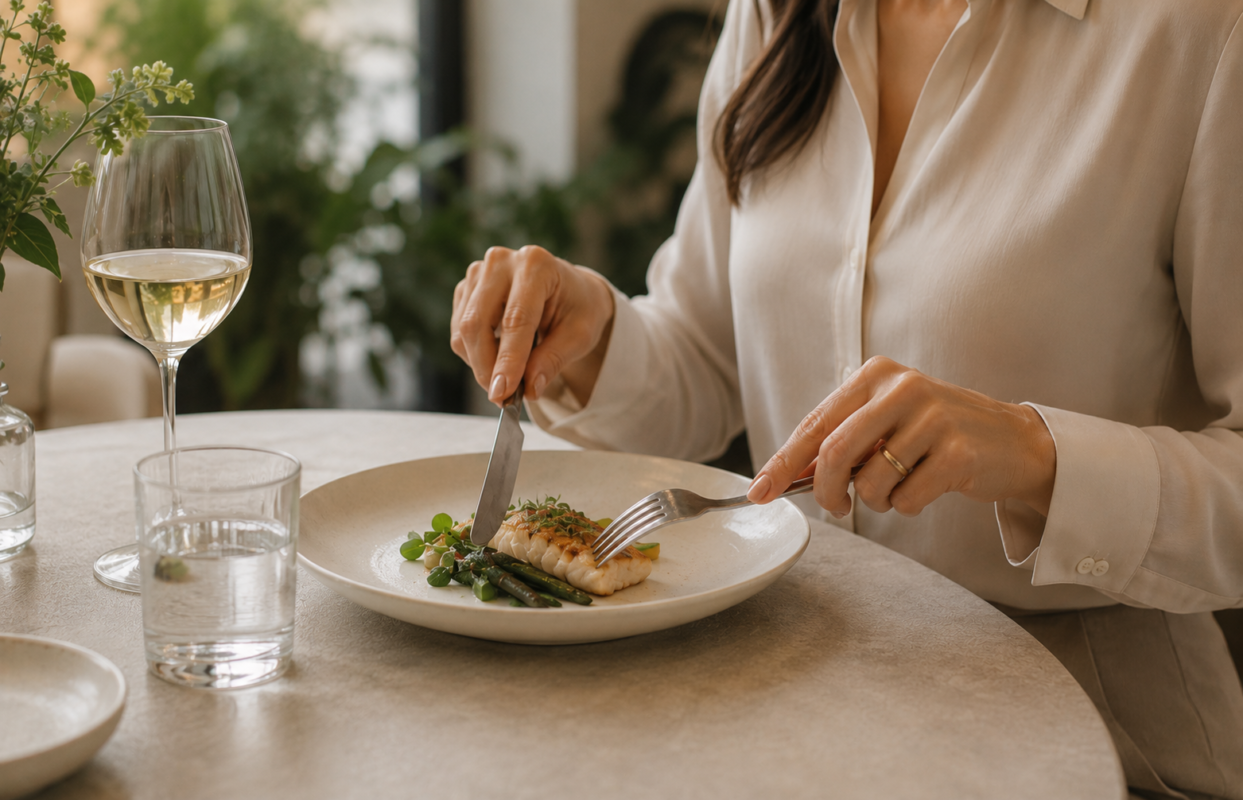
One of the most effective ways to improve your dining etiquette is to begin at home.
Meals in a familiar environment allow you to practise without pressure or self-consciousness.
This is also where awareness begins.
Instead of trying to change everything at once, focus on one habit at a time.
Notice how you sit.
How you use your utensils.
How you move through your meal.
Maintain a balanced posture, eat at a steady pace, and remain present during the experience.
These small adjustments may seem simple, but they are where refinement begins.
And over time, consistency turns those actions into habits that feel natural rather than forced.
As these behaviours become part of your routine, they begin to carry over naturally into social settings.
Carry the Same Habits into Casual Settings

Most dining experiences in everyday life are informal, which makes them valuable opportunities to practise what you are learning.
Whether you are meeting a friend for coffee, dining with family, or attending a casual gathering, maintain the same level of awareness.
The setting may feel relaxed, but your behaviour still shapes the atmosphere around you.
Being attentive, composed, and considerate helps create ease for everyone at the table.
And when your habits remain consistent, your confidence becomes more steady in any environment.
How to Practice Dining Etiquette: Observe the Flow of the Table
When you are unsure how to behave in a dining setting, one of the simplest things you can do is observe.
Notice the rhythm of the table.
Pay attention to when others begin eating, how conversation flows, and how people move through the meal.
These small cues often help you understand what is expected without needing to overthink your actions.
You do not need to copy every detail.
Simply observe the overall atmosphere and adjust naturally as you go.
Over time, this becomes easier, and you will find yourself navigating different dining situations with greater confidence and ease.
Small Habits That Make a Difference
Practising dining etiquette in everyday life often comes down to small choices.
Simple habits — such as putting your phone away, slowing down while eating, or pausing before speaking — can completely change the way you carry yourself at the table.
You do not need to perfect everything at once.
Start with one or two habits and practise them consistently.
Allow them to become part of your natural behaviour over time.
Dining etiquette is not reserved for formal occasions.
It is built in everyday moments and shaped by how you approach them.
With consistency, your actions begin to feel more effortless, and you move through different settings with greater confidence and composure.
In the end, it is not one individual action that leaves the strongest impression.
It is the overall feeling you create — one of ease, awareness, and consideration for others.
Dining etiquette is not about perfection.
It is about awareness, consistency, and consideration for the people around you.
The more you practise these habits in everyday life, the more natural they begin to feel.
And over time, they become part of the way you carry yourself — quietly shaping your confidence, your presence, and the experience others have around you.
If you would like to develop this further, you can explore my coaching programmes designed to help women refine their presence and build confidence in social settings.
You may also find it helpful to read:
- Dining Etiquette for Beginners
- Common Dining Etiquette Mistakes to Avoid
Both are designed to help you continue building confidence and ease at the table.
Explore Reinada